
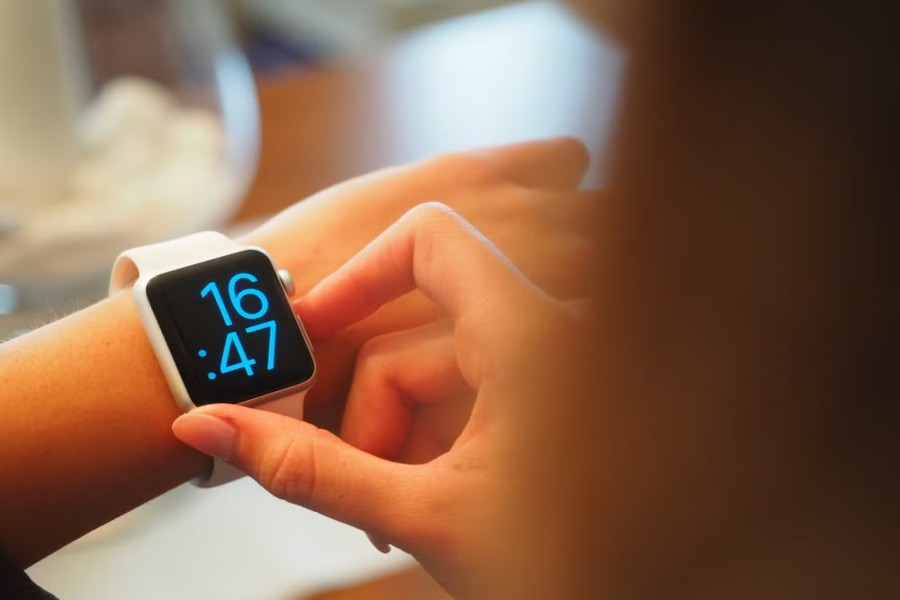
Most people grow up reading 12-hour clocks, so a 24-hour watch face can look unusual at first. Instead of the hour hand circling the dial twice per day, the full day is represented in one cycle. Midnight, noon, afternoon, and evening all have a fixed place on the same visual map.
That small change can make time feel different. A 24-hour display is not only about military time or technical precision. It can also help people understand where they are in the day, especially when schedules cross time zones, daylight is unusual, or work happens outside a normal nine-to-five rhythm.
A Better View of the Whole Day
A standard 12-hour face repeats itself twice. Seven in the morning and seven in the evening occupy the same position. Most of the time, context solves that ambiguity. But when sleep, travel, night shifts, or remote work are involved, a full-day view can be clearer.
On a 24-hour face, morning and evening are not mirrored. The watch shows progression through the whole day rather than half of it. That makes the display useful for people who think in schedules, windows, and cycles.
Useful for Travel and Time Zones
Travelers often juggle local time, home time, meeting time, and arrival time. A 24-hour format reduces the chance of confusing morning and evening, especially when flights, train departures, or international meetings use 24-hour notation.
A smartwatch can make this even more practical. A Garmin face can combine a 24-hour layout with date, battery, weather, sunrise, or a second time zone. The result is a compact travel screen that does not require opening a phone every few minutes.
Helpful for Shift Work
Shift workers live with time differently. Nurses, security teams, logistics workers, emergency staff, and factory operators may start or finish work when others are asleep. A 24-hour watch face can make schedules feel less ambiguous because it treats the day as one continuous timeline.
For someone working nights, a conventional dial can feel too tied to daytime habits. A full-day face makes it easier to see whether a time belongs to the first half or second half of the day without relying on AM or PM labels.
Outdoor and Polar-Day Contexts
Hikers, sailors, pilots, and people traveling in high-latitude regions can also benefit from a full-day view. In places where daylight lasts unusually long or disappears quickly, a 24-hour dial gives a stronger visual sense of day progression.
For Garmin users, 24-hour watch faces can be especially useful when paired with sunrise, sunset, battery, or activity data. The face becomes a time map rather than a simple clock.
Design Still Matters
A 24-hour face needs careful design. If every number, marker, and data field competes for attention, the watch becomes harder to read. Good designs keep the time obvious and use supporting information sparingly.
Digital 24-hour layouts can be very clear, but analog 24-hour faces have their own appeal. They show the day as a circle, which can feel more natural for people who like visual planning. The key is contrast, spacing, and a layout that does not require relearning the watch every time it is checked.
A Small Change That Changes the Habit
A 24-hour watch face will not suit everyone. Some users will always prefer the familiarity of a 12-hour dial or a large digital clock. But for travel, shift work, outdoor use, and schedule-heavy days, the full-day view can be surprisingly helpful.
Once the layout becomes familiar, it gives more context than a normal clock. Instead of only answering “what time is it?”, it quietly answers a second question too: where am I in the day?